
GEO vs SEO: What Actually Changes for an Advisory Firm's Website
SEO ranks pages; GEO wins citations inside AI answers. The differences that matter for an RIA, what stays the same, and where to spend the next quarter.


SEO focuses on discovery through search results; GEO focuses on mentions and citations in AI-generated answers. For an advisory firm's website, keep pages accessible, facts consistent and answers useful, then measure search and AI visibility separately. There is no universal percentage for dividing the work, and neither approach ensures a recommendation.
Key takeaways
- SEO competes for ranked links in Google; GEO competes for citations and mentions inside AI answers. Different games, shared ball.
- The GEO unit of competition is the mention or citation, not the position - either the AI names you or it does not.
- As a starting experiment, try splitting work between basic SEO hygiene and answer-worthy content, third-party mentions, and visibility measurement. Adjust to your firm’s current gaps; no fixed ratio is established.
On this page
- What SEO actually optimizes
- What GEO optimizes instead
- The differences that matter for an advisory firm
- What stays the same
- Where an RIA should spend first
- Side by side
- Mistakes we see RIAs make with GEO
- A 60-day GEO starter routine
- Questions advisors ask about GEO vs SEO
- The one-line summary
- What this means for your next quarter
- Where this split has limits
- Where Valora fits
- The bottom line
- The bottom line
- Frequently asked questions
What SEO actually optimizes
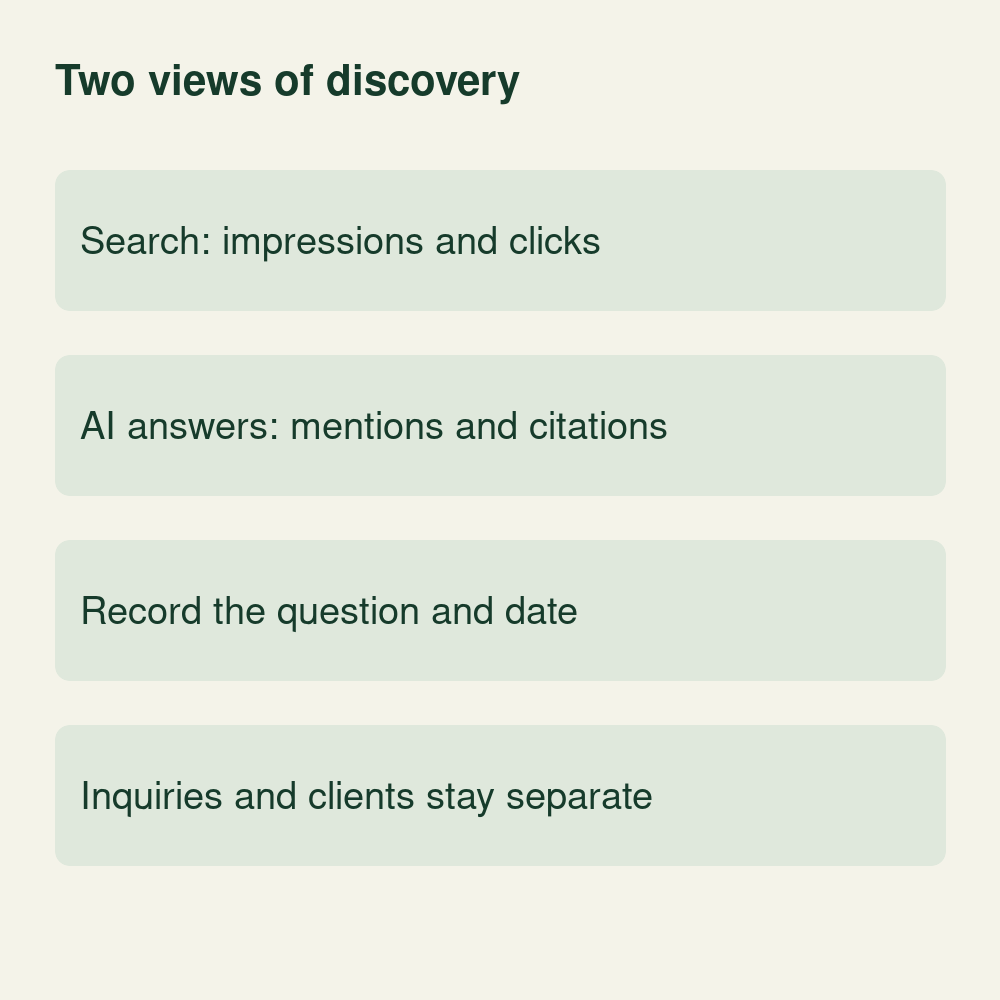
Search visibility involves eligibility, indexing and the results shown for a query. Use relevant titles, useful answers and sound technical access, then inspect actual impressions, clicks and inquiries rather than inferring traffic from a fixed position.
Search Console can report impressions and clicks; a ranking change alone does not establish an exact traffic value. Keep discovery metrics separate from signed-client attribution.
What GEO optimizes instead
Generative engines do not return a list of links and let the user choose. They read many sources, synthesize an answer, and cite a handful of them - or none visibly at all. The unit of competition is not the ranking; it is the citation and the mention. Either the AI names your firm or quotes your page, or you do not exist in that answer.
The GEO research presented at KDD 2024 tested content changes on its GEO-bench query benchmark. It reported source-visibility gains of up to 40% under its metrics, with results varying by domain. This does not establish an advisory-firm client-acquisition effect or reveal the algorithm of a commercial AI tool. Sources: GEO paper.
The differences that matter for an advisory firm
Different evidence. SEO rewards pages. GEO rewards claims. A generative engine is hunting for sentences it can confidently reuse: specific, sourced, unambiguous. "We serve clients nationwide" is unusable. "Our median new client is a 47-year-old physician with $1.2M in retirement assets" is a sentence an AI can build an answer around.
Ahrefs' May 2025 analysis of 75,000 brands found a Spearman correlation of 0.664 between web mentions and Google AI Overview visibility in its selected sample. Its December 2025 follow-up found YouTube mentions had the strongest measured correlation, about 0.737, across ChatGPT, AI Mode and AI Overviews. These are observational associations, not causal levers, recommendations or client-acquisition results. Sources: Ahrefs May study; December follow-up.
Different user behavior. A search user skims ten blue links and picks one. An AI user asks a follow-up question. That means the evaluation happens inside a conversation: "who is a good advisor for tech employees in Seattle," then "what do they charge," then "how are they different from a robo-advisor." Your content has to answer a chain of questions, not win a single query.
Different scoreboard. Rankings are public and stable enough to track weekly. AI answers vary by engine, by phrasing, and over time, and the engines share no position reports. Measurement means running a fixed set of prospect questions monthly through ChatGPT, Perplexity, and AI Mode, and recording whether you appear and what gets cited.
What stays the same
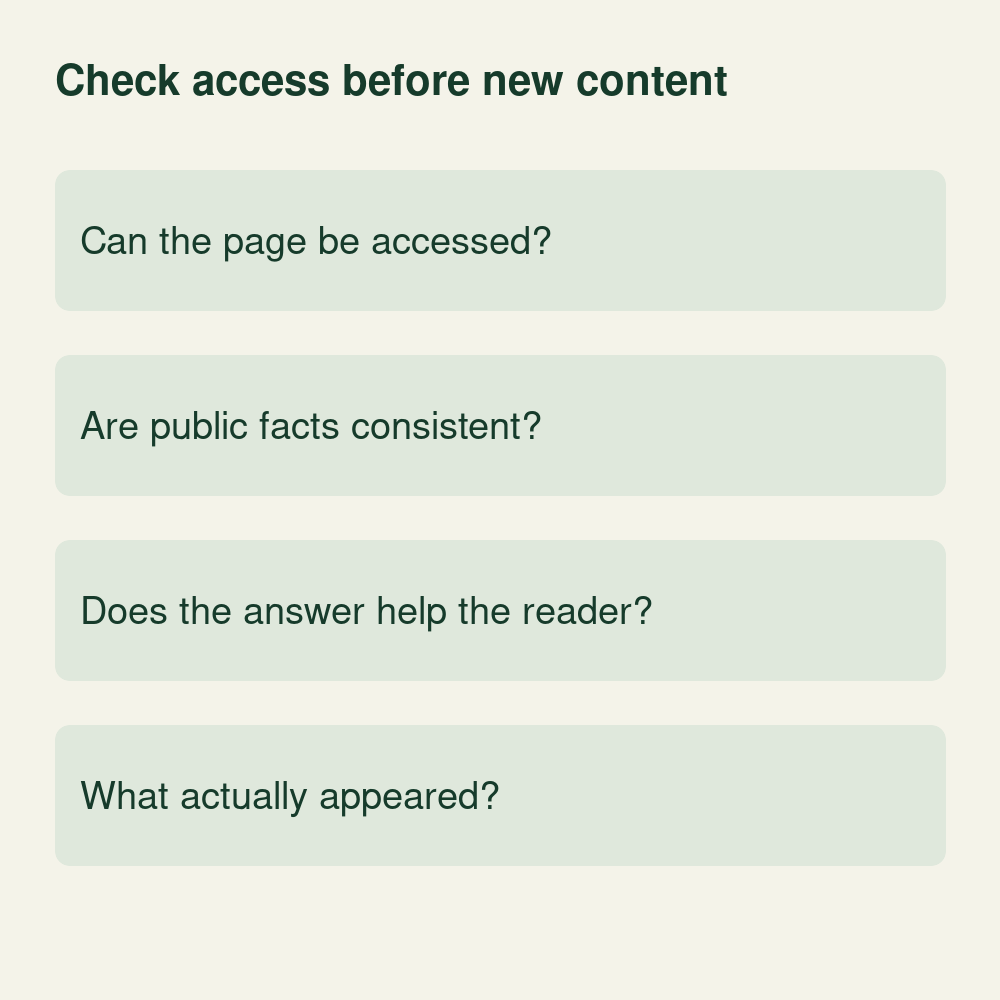
Google and OpenAI have different access and eligibility controls. Google says supporting links in AI Overviews and AI Mode must be indexed and eligible for a Search snippet. OpenAI identifies OAI-SearchBot for ChatGPT search and distinguishes it from GPTBot and user-triggered access. Check each system separately; a Google access problem does not prove ChatGPT cannot read the same site. Sources: Google AI eligibility; OpenAI crawler controls.
Where an RIA should spend first
Fix confirmed access and fact-quality gaps first, then test useful answers and relevant third-party information. The GEO benchmark does not establish a cheap commercial advantage or a universal priority for the next marketing hour.
A starting experiment is to keep technical SEO healthy while testing answer pages with real substance, third-party mentions, and periodic AI-visibility measurement. Revisit the mix quarterly; no fixed effort ratio is established.
Checking your own visibility? Request the free readiness check. A completed readiness review can show examples of how your firm appears in AI answers at the time of the check. Request a review: Can ChatGPT find your firm?
Side by side
The cleanest way to hold the distinction:
- Unit of competition. SEO: the ranked page. GEO: the cited claim.
- Evidence to inspect. Search and AI services may surface links and mentions differently; no single signal establishes placement.
- Content that wins. SEO: comprehensive pages targeting a keyword. GEO: specific, sourced, quotable sentences inside those pages.
- User behavior. SEO: one query, one click. GEO: a conversation of follow-up questions.
- Measurement. SEO: rank trackers and Search Console. GEO: monthly manual checks across ChatGPT, Perplexity, and AI Mode.
- Maturity. SEO: a twenty-year playbook with heavy competition. GEO: a two-year playbook with almost none.
Mistakes we see RIAs make with GEO
Writing for the algorithm instead of the answer. Keyword-stuffed service pages were built for a crawler. Generative engines read like a person skimming for evidence, and the GEO paper found keyword stuffing actively reduces visibility. Write the page a smart prospect would bookmark.
Generic positioning. "Comprehensive wealth management for individuals and families" appears on thousands of advisor sites, which is exactly why no AI will ever repeat it. If your claim could sit on a competitor's homepage unchanged, it does no work for you anywhere - and least of all inside an AI answer.
Review your public directory entries, press quotes and other mentions for accuracy and stale claims. The Ahrefs correlations do not establish that the off-site trail is the strongest causal lever for your firm.
Expecting a dashboard. There is no Search Console for ChatGPT. Firms that wait for perfect measurement before starting will hand the early ground to firms willing to run a monthly manual check on a spreadsheet.
A 60-day GEO starter routine
Weeks 1-2: baseline. Write down the ten questions your ideal clients ask before hiring you. Run each through ChatGPT, Perplexity, and Google's AI Mode. Record who gets named and what gets cited. That is your baseline, and the cited sources are your competitor map.
Weeks 3-6: build three citation-worthy pages. Take the three questions where you should win and do not. Write a full, specific, numbers-backed answer to each on your site. Cite real sources. Include your firm's actual data points where you can - your client mix, your process timelines, your fee structure explained in plain terms.
Weeks 7-8: extend the trail. Book two podcast or guest-article appearances that name your firm and specialty in writing. Refresh every directory profile so it matches your site word for word. Then re-run your ten questions and compare.
Done researching? Request the free readiness check. A completed readiness review can show examples of how your firm appears in AI answers at the time of the check. Request a review: Can ChatGPT find your firm?
Questions advisors ask about GEO vs SEO
Will GEO replace SEO? Not on any visible horizon. Google still sends the overwhelming majority of trackable web traffic, and its own AI answers draw on the same index. Treat GEO as a layer on top of SEO, not a replacement.
A small firm can publish a useful, specific answer within its expertise. A larger firm can do that too. Whether an AI service cites either page must be observed; specificity is not a promise that a small page beats a large competitor.
Keep work that your own records show remains useful. Test new visibility work against current evidence without assuming future clients prefer an AI path.
The one-line summary
Search discovery and AI mentions are different observations to measure. Neither approach ensures clicks, trust or a client conversation, and no open-field advantage is established here.
Request the free AI-search readiness check. A completed review can show examples of how your firm appears in AI answers at the time of the check: Can ChatGPT find your firm?
What this means for your next quarter
Measure search discovery and AI mentions separately. Keep technical access healthy and publish useful evidence, but do not assume either approach wins a conversation before a search.
There is no established window in which three pages and five mentions will own a niche. Use those as possible planning targets, review current evidence and measure actual appearances and inquiries.
Sources and scope: the KDD 2024 GEO benchmark and Ahrefs May/December 2025 observational samples. The desktop-keyword dataset describes observed search results, not individual consumer searches or lost-click attribution. Sources: GEO paper; Ahrefs May; Ahrefs December; Desktop-keyword analysis.
Where this split has limits
Any effort split is a planning hypothesis, not a law: a firm with broken technical SEO may need to focus on hygiene first. AI-visibility measurement is still noisy, so treat any single review as a data point, not a verdict.
Where Valora fits
Valora is testing a way for financial advisors to build a more measurable client-acquisition system across LinkedIn outreach and AI-search visibility. Request the free readiness check. A completed review can show examples of how your firm appears in AI answers at the time of the check. We are still validating the path from visibility and outreach to qualified introductions; ask us how the founding advisor program is structured. Request the free readiness check: Can ChatGPT find your firm?
The bottom line
SEO and GEO are different games that share a ball. Keep pages accessible and useful, test answer-worthy content and third-party mentions, and check how AI tools describe your firm. There is no universal percentage for dividing the work.
Frequently asked questions
1. What is the difference between GEO and SEO?
SEO competes for ranked links in Google. GEO - generative engine optimization - competes for citations and mentions inside AI answers. The unit of competition in SEO is the ranking; in GEO it is whether the AI names or quotes you.
2. Does SEO still matter for advisory firms?
Yes. Indexable pages, useful content, and sensible links can help readers and crawlers find the site. Test a mix of technical hygiene, answer-worthy content, third-party mentions, and AI-visibility measurement rather than assuming one fixed split.
3. How do you measure GEO results?
Not with rank trackers. You test the questions your prospects ask in ChatGPT, Perplexity, and Google's AI features on a schedule, record whether your firm is named or cited, and track the change month over month.
Want examples of how your firm appears in AI answers? Request the free readiness check. A completed readiness review can show examples of how your firm appears in AI answers at the time of the check. Request a review: Can ChatGPT find your firm?



