
How should an adviser handle a prospect checking an explanation with ChatGPT?
A fictional meeting example shows how to inspect an AI answer, check its sources and explain uncertainty. Agreement from a tool is not proof of accuracy or client trust.


If a prospect uses ChatGPT to check an explanation during a meeting, ask what the tool returned and compare it with the relevant source evidence. Explain uncertainty and the limits of a generic answer. The example below is fictional; it does not describe a verified meeting or establish how prospects behave.
Fictional example: during a first meeting, a prospect asks ChatGPT to check an adviser's explanation of money-market risk. The tool might agree, disagree or omit an important distinction. The adviser asks to see the answer and checks the underlying claim against current source evidence before discussing it.
Key takeaways
- The meeting scenario is explicitly fictional, not a verified r/CFP report or a measure of prospect behavior.
- Ask what an AI tool returned and check its source evidence and assumptions.
- A tool agreeing with an explanation does not prove accuracy, trust or future business.
On this page
- Preparing for an AI-assisted question
- What the fact-check actually checks
- Three adjustments worth making this quarter
- Agreement is not a trust measure
- Review and recordkeeping questions
- The same evidence standard applies to every firm
- Where this example has limits
- Where Valora fits
- The bottom line
- The bottom line
- Frequently asked questions
This example is a prompt for preparing a review process, not evidence of a trend. The useful question is how to address the concern without treating an AI answer as an independent verdict.
Preparing for an AI-assisted question
A person may bring an AI-generated answer to a conversation. Prepare to inspect its sources, date and assumptions rather than describing it as instant verification.
Do not assume when or how often prospects use AI tools. When a person shares an answer, check the specific question and response before drawing conclusions.
In the fictional example, neither agreement from a tool nor the prospect's reaction proves that the explanation was correct or trust increased. The evidence behind the claim matters.
What the fact-check actually checks
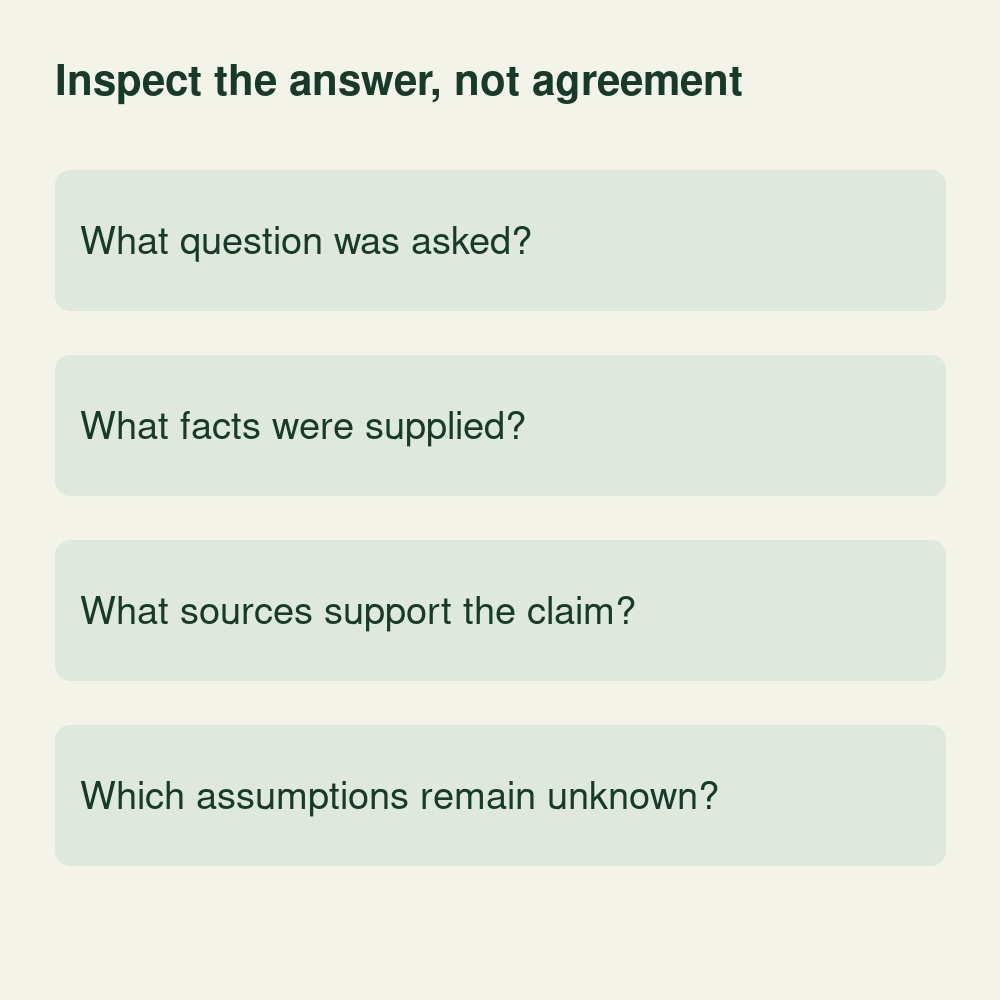
A tool's response may lack the person's full circumstances or the adviser's reasoning. Identify what was asked, what information was supplied, what sources were cited and which assumptions remain unverified.
This creates two distinct risks, and most advisors only see the first.
The obvious risk is being contradicted. A generic answer to a specific situation can sound authoritative while missing the point entirely. "Should I do a Roth conversion?" gets a different answer for a 35-year-old than for someone two years from RMDs, but a one-line prompt does not know that. If your client gets a flat yes or no from a machine and you gave the opposite advice, you now have to defend a nuanced position against a confident summary.
An AI answer about a planning strategy and an AI answer recommending an adviser are different things. Check each observed result separately rather than treating one as proof of discovery or client acquisition.
Request a review of your firm's public website. We email a short, dated report with what we observed, what we could not verify, and useful next steps. The review does not guarantee an AI recommendation. Request a review of your firm's public website.
Three adjustments worth making this quarter
First, explain the reasoning in plain language with relevant source evidence and conditions. Follow the firm's review process before publishing. A public explanation does not ensure a tool will use it or a reader will trust it.
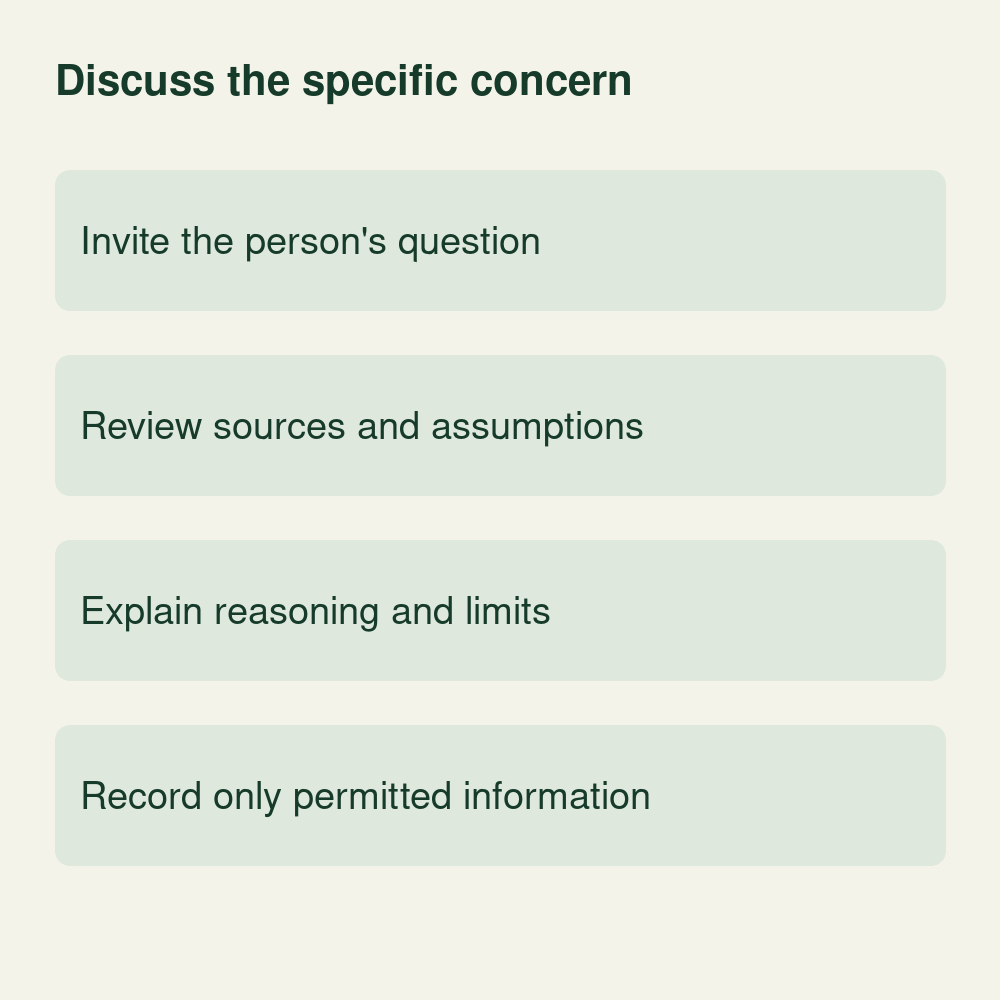
Second, invite questions. Ask the person to share the answer they want to discuss, then review its assumptions and cited sources together. Do not promise that consistency will stop a person shopping for advice.
Third, treat AI visibility as a practice metric. Ask the machine the questions your ideal clients ask, once a week, and write down what it says. Who does it recommend in your niche? What does it say about the strategies you use? Where is it wrong in ways that cost you? You cannot fix what you have not read, and most advisors have never once looked at what the machine says about their category.
Agreement is not a trust measure
Credentials, referrals and clear communication can help a reader assess a firm. A tool agreeing with an adviser is not a measure of trust or proof of sound advice.
Prepare to explain evidence and uncertainty. No outcome of an AI-assisted discussion, visibility check or client relationship is assured.
Review and recordkeeping questions
An AI tool may summarize information incorrectly. Keep controlled public facts accurate, follow the firm's review process and record specific errors when observed. Publishing content does not ensure a tool will read it or correct its answer.
When a client voluntarily shares an AI-assisted question, record only what the firm's permissions and recordkeeping process cover. Review whether the concern suggests an explanation worth improving; do not infer what all clients worry about from a small log.
Request a review of your firm's public website. We email a short, dated report with what we observed, what we could not verify, and useful next steps. The review does not guarantee an AI recommendation. Request a review of your firm's public website.
The same evidence standard applies to every firm
The ability to publish a useful explanation depends on expertise, review and the firm's process, not size alone. Both independent and large firms must support their claims; neither has an automatic AI-visibility advantage.
A person asking for evidence does not establish retention, referrals or consolidated assets. Address the specific concern and measure relationship outcomes separately.
Where this example has limits
This is a fictional scenario, not a documented meeting, a verified client outcome or a survey. Check AI-generated answers against relevant current sources; agreement alone is not verification.
Where Valora fits
Valora offers a review of your firm's public website and selected search and AI-answer results. We email a short, dated report with observations, limits and next steps. We cannot make an AI tool confirm advice or recommend your firm. Request a review of your firm's public website.
The bottom line
Make the reasoning and evidence inspectable, ask what a tool returned and address any gap or conflict. An AI answer can be wrong whether it agrees or disagrees with the adviser. No trust, recommendation or client-acquisition result is assured.
Frequently asked questions
1. Do prospects really check advisor advice with ChatGPT?
This article does not provide a verified example or measure how often that happens. Its fictional scenario helps an adviser prepare to review a tool's response with the person who brings it.
2. Should advisors be offended when a client fact-checks them?
A request for evidence need not be treated as an accusation. Ask what concerns the person and review the relevant sources together; do not assume their motive or a resulting increase in trust.
3. What should an adviser do when a client brings an AI answer?
Explain reasoning and limits, verify current facts against source evidence and follow the firm's review process. An AI tool may still misstate the claim; neither consistency nor public content ensures confirmation.
To request a review, provide your name, work email and firm website. We review public information and email a short, dated report; this is not an instant score or a guarantee of placement or leads. No payment or login is required. Request a review of your firm's public website.
In the fictional example, the next step is to inspect the answer and its evidence, not celebrate agreement or reject disagreement. Prepare a process that works in either case.



