
How to Warm Up LinkedIn Prospects Before Your First Message
Warm beats cold every time. How to make your first LinkedIn message land like a familiar name.


Before a first LinkedIn message, follow relevant people and engage only where you can add something useful to their public posts. Treat a week or two as a working example, not a required countdown or a promise of a reply. Familiarity does not establish interest or permission for repeated outreach; keep the message relevant and respect a refusal.
Key takeaways
- A first message should make relevance clear without assuming recognition or trust.
- Useful engagement can provide context; a week or two is an example, not a proven duration.
- No reply-rate improvement is established here; measure your own suitable-conversation results.
On this page
- Why Warming Up LinkedIn Prospects Works
- A Simple LinkedIn Warm-Up Strategy
- Is Warming Up Worth the Extra Time?
- Scaling LinkedIn Warm-Up
- Common Mistakes to Avoid
- Build Relationships Before You Sell
- Where warm-up has limits
- Where Valora fits
- The bottom line
- The bottom line
- Frequently asked questions
A person receiving a first message may not recognize the sender or see its relevance. Do not assume familiarity, trust or interest.
Useful public engagement is one possible way to supply context before a message.
A warm-up is a working approach to relevant engagement, not a demonstrated promise of higher response rates.
Why Warming Up LinkedIn Prospects Works
A person may ignore an unsolicited message for many reasons. No universal default response is established here.
Previous interaction may give a recipient context, but recognition should not be assumed.
Maybe they noticed your thoughtful comment on one of their posts, saw you engaging with industry discussions, or recognized your profile from previous interactions.
A previous public interaction does not establish trust, interest or a relationship.
Keep the first message relevant and measure the response rather than assuming familiarity lowered resistance.
A Simple LinkedIn Warm-Up Strategy
1. Follow Your Prospect
Start by following their LinkedIn profile.
Following someone can help you discover updates. Feed visibility is personalized, so following does not ensure every post appears.
2. Engage With Their Content
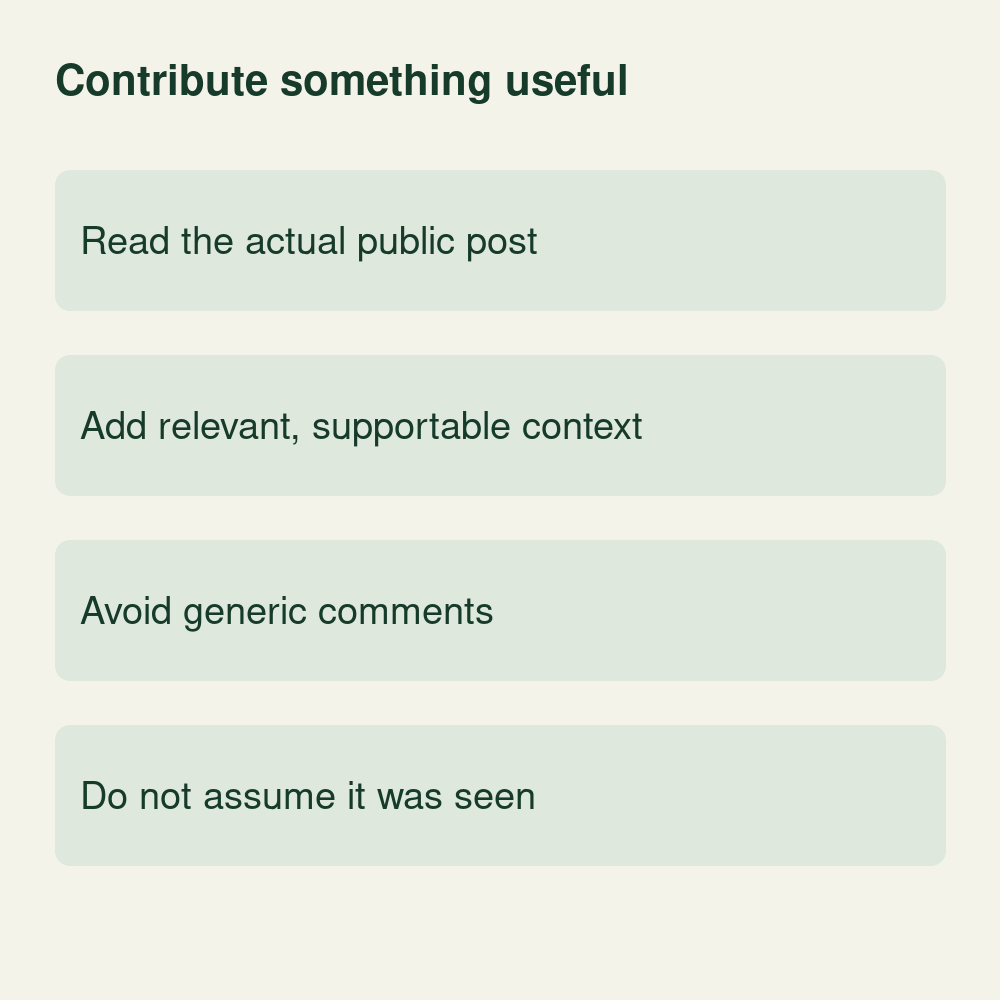
Engage because you have something useful to add, not to manufacture a relationship.
If your prospect shares posts, articles, or industry insights, engage thoughtfully.
Skip generic comments like:
Great post!
Instead, contribute something meaningful that shows you actually read their content.
For example:
"Interesting point about shortening sales cycles. We've seen a similar trend with outbound teams using intent signals to prioritize accounts instead of relying purely on ICP filters."
Comments like these:
- Make a relevant contribution
- Keep statements supportable
- Do not assume the recipient saw the interaction
Aim for two or three genuine interactions over a couple of weeks.
3. Stay Visible
Not every interaction needs to be a comment.
React or comment only where relevant; do not assume the recipient will see every interaction or welcome repeated notifications.
Consistency matters more than frequency.
4. Send a Connection Request With Context
Once you've interacted a few times, send your connection request.
Instead of a generic invitation, reference your previous interaction.
For example:
"I've enjoyed reading your posts on outbound strategy over the past couple of weeks. Thought it'd be great to connect."
It's short, personal, and doesn't immediately ask for anything.
5. Provide Value Before Pitching
Once they accept, resist the urge to book a meeting immediately.
Share something useful first:
- a relevant industry report
- an interesting insight
- a useful resource
- a thoughtful observation
Build the conversation before introducing your solution.
Share useful context without claiming that a particular style produces better replies.
Checking your own visibility? Request the free readiness check. A completed readiness review can show examples of how your firm appears in AI answers at the time of the check. Request a review: Can ChatGPT find your firm?
Is Warming Up Worth the Extra Time?
There is no demonstrated universal warm-up duration in this article.
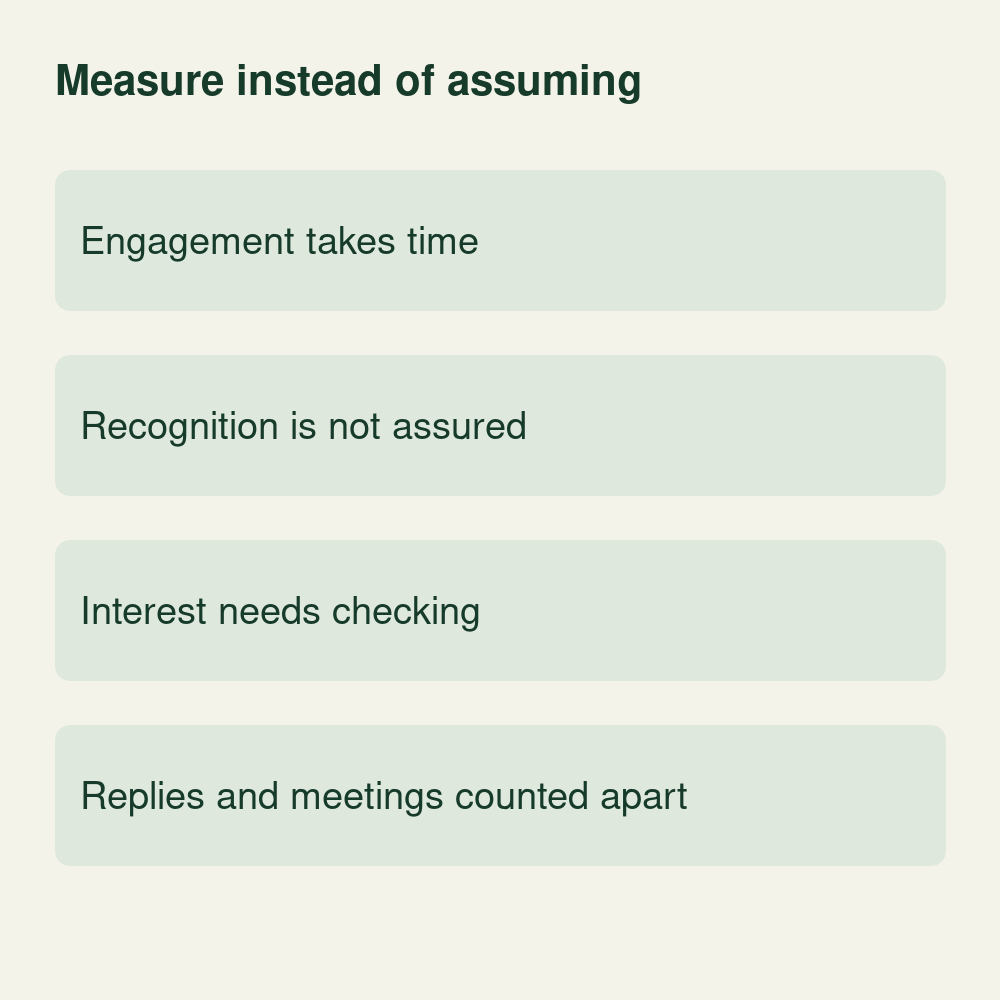
Compare the time spent with actual suitable conversations; more engagement does not ensure better results.
Recognition and interest remain things to check rather than presume.
Keep separate counts for public engagement, replies, meetings and qualified inquiries.
Scaling LinkedIn Warm-Up
The biggest challenge isn't knowing what to do—it's doing it consistently across hundreds or thousands of prospects.
Use a small review list that your team can maintain without assuming someone is ready for outreach.
Use a checklist or internal reminder to keep review work organized.
A team can use a short list of public, relevant signals to decide when a thoughtful message would help. Valora is developing adviser outreach support; automated monitoring, sequencing, and timing are not established services.
Keep engagement human-reviewed and stop when it is not useful or welcome.
Common Mistakes to Avoid
Engaging Too Often
Commenting on every post makes your outreach feel calculated.
Prefer a relevant contribution over repeated attention; this is a working judgment, not a measured reply-rate rule.
Leaving Generic Comments
Comments like "Great post!" or "Love this!" add little value.
Share an opinion, ask a relevant question, or build on the discussion.
Pitching Too Early
A sales pitch may be unwelcome. Do not treat previous engagement as permission to ask for a meeting.
Focus on starting a conversation before asking for a meeting.
Using the Same Connection Request for Everyone
Do not imply a previous interaction that did not happen.
If a real interaction is relevant, refer to it accurately and briefly.
Build Relationships Before You Sell
A first message can start with a relevant question rather than a pitch.
Public engagement is optional and should be useful on its own.
Recognition, trust and a reply are not assured. Record whether relevant engagement precedes a suitable conversation in your own pilot.
Treat the approach as a test, not a requirement or established performance improvement.
Where warm-up has limits
No reply-rate improvement is established here. Engagement takes time and does not establish consent, qualification or interest.
Where Valora fits
A note for the financial advisors reading: Valora is testing this principle for advisory firms through LinkedIn outreach and AI-search visibility. We are still validating the path from visibility and outreach to qualified introductions; no exclusive or pre-qualified lead flow should be assumed. Request the free readiness check for examples from a completed review: Can ChatGPT find your firm?
The bottom line
Engage where you can help, send a relevant message when appropriate, and respect a refusal. Measure results rather than treating a week or two of visibility as a conversion rule.
Frequently asked questions
1. What is a LinkedIn warm-up strategy?
It is a working approach of relevant public engagement before a first message. It may provide context, but it does not ensure recognition, interest or a reply.
2. How long should you warm up a LinkedIn prospect before messaging?
There is no fixed duration supported here. A week or two is an example only; relevance and whether contact is welcome matter more than a countdown.
3. Does warming up prospects actually improve response rates?
This article does not establish a response-rate improvement. Test a bounded approach using your own reply and suitable-conversation counts, while respecting refusals and contact preferences.
Want examples of how your firm appears in AI answers? Request the free readiness check. A completed readiness review can show examples of how your firm appears in AI answers at the time of the check. Request a review: Can ChatGPT find your firm?



