
When should an RIA use a niche landing page instead of a location page?
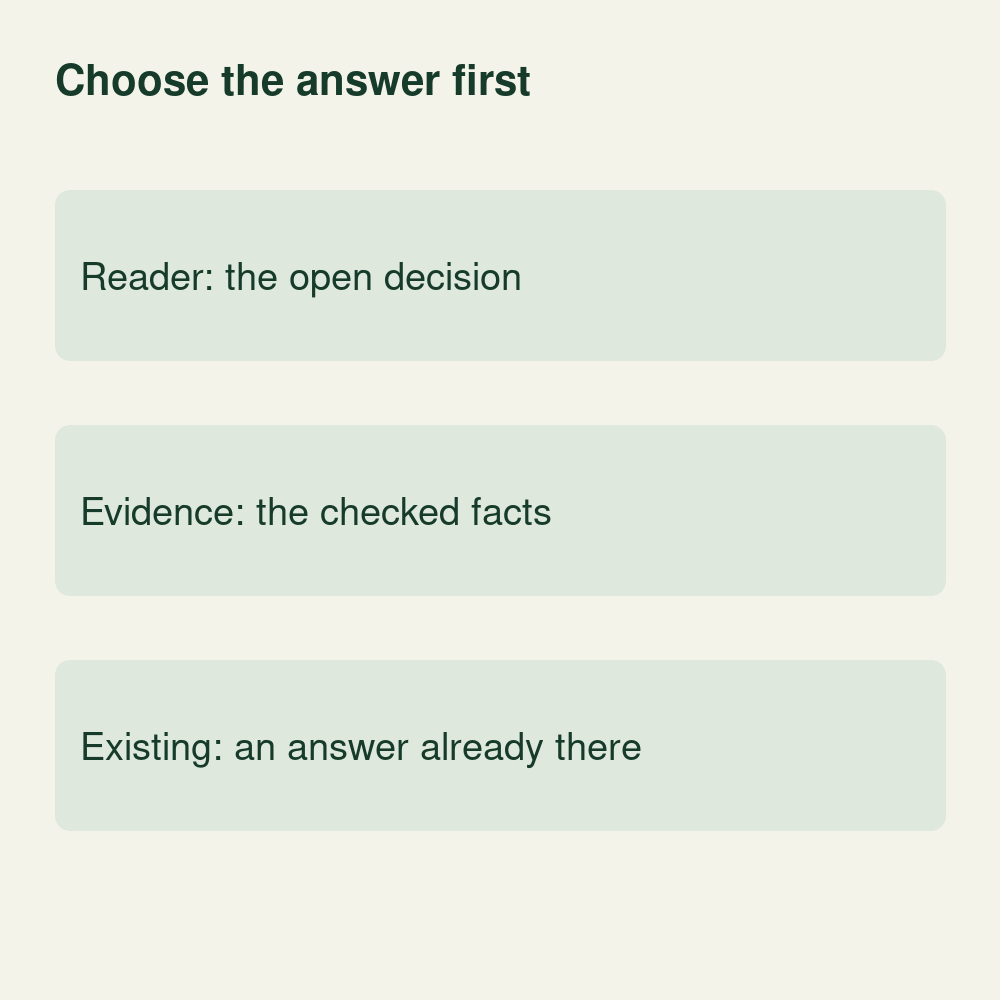
Choose a niche page, location page or existing-page update by the reader decision and checked evidence. Use a generic editorial worksheet, not a forecast.


An RIA should use a niche landing page when a defined group has a distinct reason to evaluate the firm's work, and the firm can explain that work with checked evidence. Use a location page when the reader needs practical facts about meeting or working with the firm in a particular area. If neither description adds useful facts beyond an existing service page, improve that page rather than creating another one.
What decision does the reader need to make?
Start with a sentence a prospective client could actually say. "Do you help people facing this planning decision?" points toward an audience or niche page. "Can I meet with you, and what does that involve?" points toward location or contact information. "What does this financial term mean?" points toward educational content. These are organizing questions, not a prediction about what any search system will display.
A niche page describes the firm's actual work for a defined group. A location page describes actual ways to reach and work with the firm in an area. Neither needs to become a general financial encyclopedia. Write down the reader's decision before picking a title. That makes it easier to notice when the proposed page is answering a different question, or repeating an answer the site already provides.
The Small Business Administration's market-research guide separates questions about customers, demand and location. That is useful planning background, not an RIA page-selection formula. The firm's own conversations and checked service facts supply the missing context. Do not turn one person's preference into a statement about everyone in a group.
What evidence supports a niche page?
Look for a real difference in the work, rather than a narrower name for the same offering. A group may share a planning situation, a stage of life or a type of compensation. The firm should be able to describe the decisions it helps with, the information it asks for and where its work stops. If those descriptions are identical for every proposed group, a separate page may have little to add.
A useful evidence file can contain reviewed service descriptions, general interview notes and examples of the firm's process that are appropriate for public use. Keep private client details out of the public draft. A story can help the writer understand a question without becoming a testimonial, case study or claim on the finished page. Permission and review for those uses are separate matters.
Kitces' discussion of finding a specialization through interviews offers a practitioner perspective on learning what people need. Use that perspective to ask better questions, not to assert that a niche is proven or profitable. The goal here is a page that a reader can use to assess fit, with an honest account of the firm.
For example, a hypothetical firm may have a reviewed process for helping people prepare for retirement while coordinating several sources of income. A niche page could explain that process and its limits. It should not imply that every person nearing retirement needs the same engagement, that the firm handles every related issue or that a particular financial result will follow.
If the group itself is still undecided, begin with the existing guide to choosing an adviser niche. This article addresses the later editorial choice: whether the evidence warrants a separate page. It does not repeat the earlier guide's task of selecting and testing a group.
What evidence supports a location page?
A location page earns its place through practical information. Check whether the firm has an actual office or meeting arrangement, what visitors should know before coming, how appointments work and which contact route is current. Describe remote and in-person options accurately. A location name in a heading does not establish an office, a service boundary or a local relationship.
Use a source the firm's responsible person can check. An old directory entry or a photograph is a lead, not enough to establish current access. Confirm the facts against the firm's current records and the person responsible for visits. Where the page describes whom the firm can serve, route that statement to the appropriate reviewer rather than inferring it from an address.
Do not fill the page with generic facts about an area just to make it longer. A reader deciding whether to contact the firm needs useful access information, not a copied description of the surrounding community. If those facts fit comfortably on the current contact page, that may be the right home. The page choice should follow the information, not the other way around.
Keep facts about presence separate from claims about expertise. Having a meeting place does not prove the firm specializes in every planning issue faced by people nearby. Likewise, serving a defined group remotely does not prove a local office exists. The draft should say what each checked fact supports, without making the reader connect unsupported dots.
How should the firm record the choice?
Use the following worksheet as an original editorial aid. It is not a score, certification or legal checklist. The entries are hypothetical, and the last column deliberately allows "no new page." Keep the private evidence in the firm's appropriate system; the public page should contain only reviewed facts.
| Reader question | Evidence to check | Possible home | What stays open |
|---|---|---|---|
| Do you help with our shared planning situation? | Actual service scope, relevant process and limits | Niche page or existing audience section | Whether the group needs a separate explanation |
| Can I meet the firm in this area? | Current meeting arrangements and contact facts | Location page or contact page | Who confirms the access information |
| What work does an engagement include? | Reviewed service description and starting process | Existing service page | Which details are missing or stale |
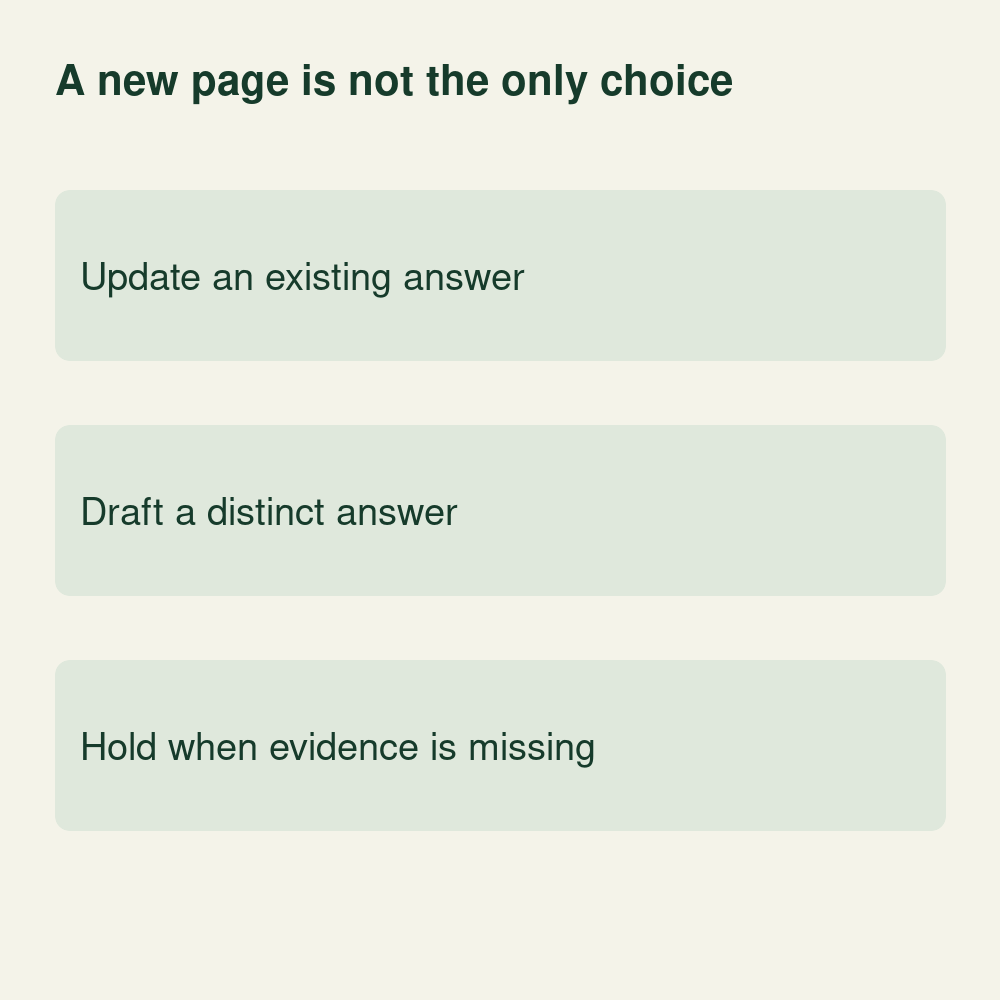
| Why would this page differ from the one we have? | Side-by-side comparison of the reader decisions | Update, new page or no publication | Exact-version editorial approval |
Give the worksheet an owner and a review date. Record which facts have been checked, which are still assumptions and who can settle them. Do not treat a completed row as approval to publish. The reviewer needs the actual proposed wording, not only the writer's description of it. A changed service or meeting arrangement can also make a previously checked sentence stale.
When does one page need both kinds of facts?
A niche page can include a short, accurate explanation of how people meet with the firm. A location page can link to the firm's actual services. That does not mean every combination deserves a new page. Ask whether the combined page gives a reader something useful that neither existing page already provides.
Compare the headings and opening answers side by side. If the drafts differ only in a group label or area label, stop and reconsider. The SBA's business-plan guidance separates customer segments, value propositions and channels. Those categories can help the writer avoid confusing whom the firm serves with how people reach it. They do not establish that a new page is needed.
What should reviewers check?
Read the proposed page as a person deciding whether the firm fits their needs. Can they distinguish the service from an educational example? Are the meeting facts current? Does every specialty or presence statement have supporting evidence? Are the next steps described honestly? Clear wording cannot repair an unsupported claim; it can only make the claim easier to see.
The U.S. Web Design System's maturity model starts with real user needs and testing assumptions with people. Digital.gov's content guidance likewise emphasizes clear, audience-focused writing. These are general design readings, not adviser-specific obligations. Apply their plain-language approach while keeping the firm's own review boundaries intact.
For a broader record of what supports a public statement, use the existing website claim-review ledger guide. Keep the final approved version linked to that record. This article's worksheet does not authorize redirects, deletions, a site migration or a change to any existing canonical.
What does this framework leave open?
This is an editorial framework, not financial, legal or compliance advice. It supplies no forecast of ranking, AI citations, visits, inquiries or signed clients. A good page decision and a business result are different things. The SBA's marketing guidance is additional background on describing an audience and a marketing plan, not evidence of this firm's performance.
Valora's readiness check is a separate, dated look at what AI tools can learn about a firm. It does not establish the firm's expertise or certify its page choices. First decide what the reader needs, collect the evidence and choose the simplest useful home for the answer. When the evidence is missing, leaving a page unpublished is a valid outcome.
Frequently asked questions
Does a niche label establish expertise?
No. The page needs checked facts about the firm's actual work and limits. A group label alone supplies none of that evidence.
Does an area name establish a local office?
No. Verify current meeting arrangements and access facts. Do not infer presence or service boundaries from a heading.
Should every group and area get a separate page?
No. Compare the reader decisions and existing answers. Update an existing page or leave the idea open when no distinct useful answer is supported.
Can one page contain both niche and location facts?
Yes, if the facts are accurate and help the reader decide. That does not mean every combination needs a new page.
Does the worksheet predict inquiries or AI citations?
No. It is an original editorial organizing aid, not a ranking formula, performance forecast or compliance certification.



