Guide
Roth conversion: gather the records and check the rules before you convert

A Roth conversion has rules that apply mechanically, whatever your situation. This guide is a pre-conversion checklist: what a conversion is, which records to collect first, which rules apply to everyone, and what to ask your tax professional. It does not answer whether converting is worth it for you; the Valora insights piece When a Roth conversion is worth the tax bill covers that judgment. It does not compute your tax; the Roth conversion tax cost calculator gives a flat-rate estimate and states its own limits.
Key takeaways
- A conversion moves money from a traditional IRA to a Roth IRA, and the converted amount is generally included in your gross income for that year, except any part that is a return of basis.
- Form 8606 works on the aggregate of all your traditional, SEP and SIMPLE IRAs, so your nondeductible basis is spread across every dollar converted. Gather your balance statements and prior Form 8606 history first.
- Two separate 5-year clocks apply to Roth money, and they are not the same clock. A conversion made in 2018 or later cannot be recharacterized back to a traditional IRA.
This guide is for US readers. It is educational, not individual tax, investment or legal advice. Valora is not a registered investment adviser and is not arranging advisor matches or introductions at this time. It covers federal rules only, not state rules. Every rule below is quoted from IRS publications and form instructions with their editions in Sources.
What a conversion is
You can convert a traditional IRA to a Roth IRA, and the IRS treats the conversion as a rollover (Publication 590-A, 2025 edition). There are three methods: a 60-day rollover, where you receive the money and contribute it to the Roth IRA within 60 days; a trustee-to-trustee transfer; and a same-trustee transfer, which can be done by redesignating the account. You must include in gross income the part of the converted amount you would have included if you had taken it as a distribution; any part that is a return of your basis is not included (Publication 590-A). One more mechanical fact: a conversion made in 2018 or later cannot be recharacterized, meaning it cannot be undone back into a traditional IRA (Instructions for Form 8606, 2025 edition).
Records to gather
The IRS instructs you to keep records verifying the nontaxable part of your IRA distributions until all distributions are made (Instructions for Form 8606). Before a conversion, collect:
- Every traditional, SEP and SIMPLE IRA balance, with its December 31 value. The custodian of each account issues a statement showing the year-end value, generally sent by January 31 (Instructions for Form 8606, line 6).
- Your prior Form 8606 history. Your basis in traditional IRAs is the total of your nondeductible contributions, plus nontaxable amounts in rollovers, minus nontaxable distributions you have already taken (Instructions for Form 8606). The IRS record list includes page 1 of Form 1040 for each year you made a nondeductible contribution, all filed Forms 8606 with their worksheets, Forms 5498, and Forms 1099-R. These live with your filed returns; Forms 5498 and 1099-R come from your custodians.
- This year's Form 5498 for each IRA. The custodian issues it; it reports contributions and the year-end value.
- Your expected income picture for the year. This is your own estimate from pay and other income records, because the converted amount adds to gross income (Publication 590-A). What that means for your bracket is a question for your tax professional, not this page.
The pro-rata rule, mechanics only
Form 8606 does not work account by account. Its Part I figures the nontaxable part of your conversions and distributions by comparing your total basis against the total value of all your traditional IRAs as of December 31, plus the year's distributions and outstanding rollovers (Instructions for Form 8606, 2025 edition; for this form, "traditional IRA" includes traditional SEP and SIMPLE IRAs). The mechanical result: you cannot choose to convert only your after-tax dollars while pre-tax dollars remain in any of these accounts. The form spreads your basis across the whole pool. No example is computed here. Note: the Roth conversion tax cost calculator estimates tax at a single flat rate and does not model this pro-rata basis rule.
The two 5-year clocks
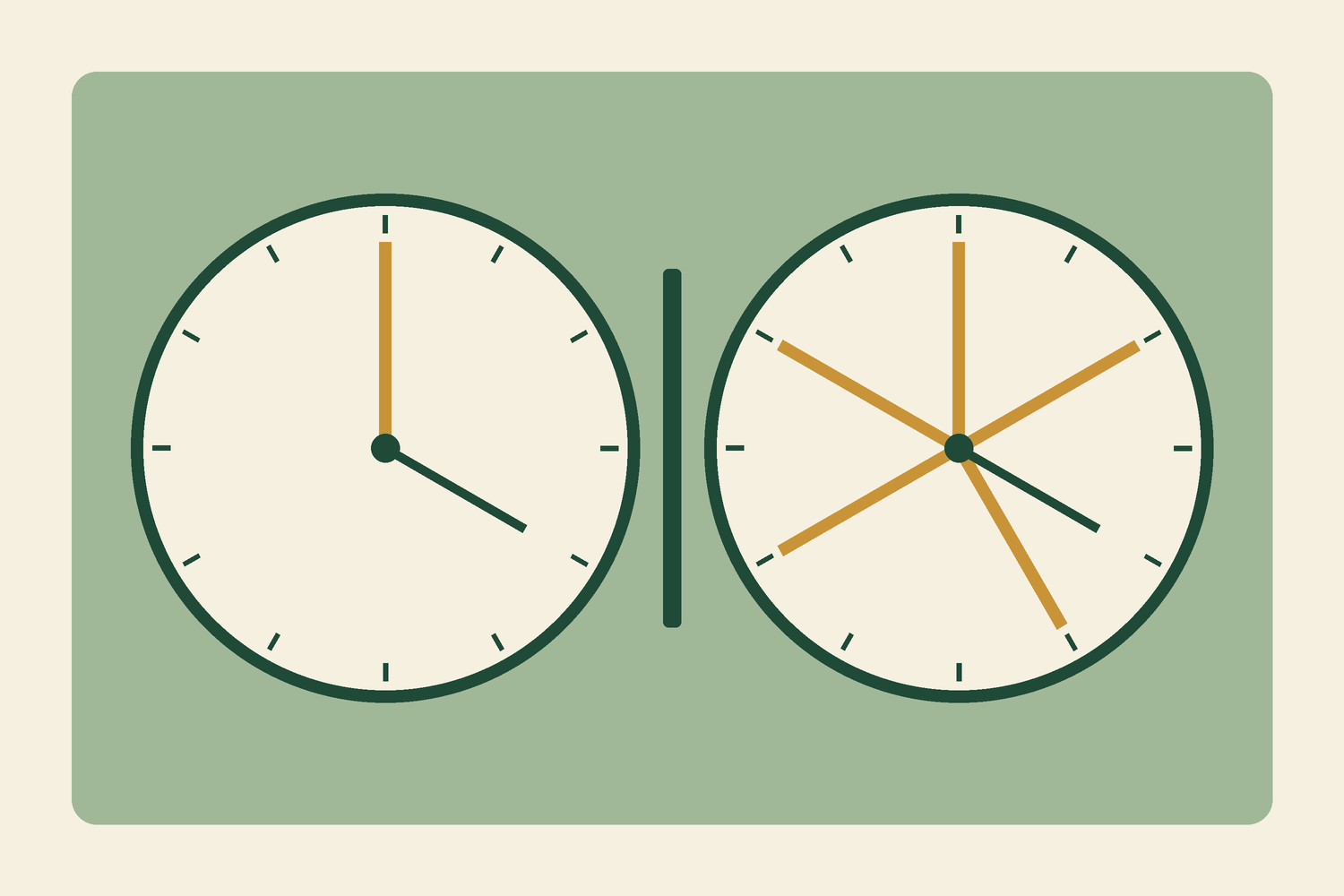
Publication 590-B (2025 edition) describes two different 5-year periods, and says they are not necessarily the same.
Clock one, for qualified distributions. A qualified distribution is one made after the 5-year period beginning with the first tax year for which any contribution was made to a Roth IRA set up for you, and that also meets one of these: made on or after age 59 and a half, made because of disability, made to a beneficiary after death, or a first-home distribution up to a $10,000 lifetime limit. Qualified distributions are not included in gross income.
Clock two, for each conversion. If you take a distribution from a Roth IRA within the 5-year period starting with the first day of the tax year in which you made a conversion, you may owe the 10% additional tax on the part attributable to the converted amount you had to include in income. A separate 5-year period applies to each conversion, and it begins on January 1 of the conversion's tax year. Publication 590-B's example: a conversion made on February 25, 2025 has a 5-year period beginning January 1, 2025.
Reporting
Expect a Form 1099-R for the year of the conversion; a conversion is a distribution from the traditional IRA side (Publication 590-A; the IRS record list in the Form 8606 instructions includes Forms 1099-R for each year you received a distribution). File Form 8606 with your return: you must file it for any year you convert an amount from a traditional IRA to a Roth IRA, and conversions are reported in Part II (Instructions for Form 8606, 2025 edition). A conversion counts for the tax year it happens in; the year-end tax checklist covers that calendar fact in more detail.
Withholding, one caution
If you use the 60-day method, the money passes through you as a distribution. Federal income tax is withheld from distributions from traditional IRAs unless you choose not to have tax withheld; for nonperiodic payments, tax is generally withheld at a 10% rate, and Form W-4R is the withholding certificate (Publication 590-B, 2025 edition). Ask your custodian how the withholding election applies before choosing a method, because cash withheld on the way does not arrive in the Roth IRA. IRS Publication 505 (2026 edition) covers withholding and estimated tax payments if the conversion raises what you owe for the year.
Questions for your tax professional
- Which conversion method fits, and how does my custodian handle the withholding election for each?
- Given my total basis and total balances across all traditional, SEP and SIMPLE IRAs, what part of a conversion would be taxable under the pro-rata rule?
- Should my withholding or estimated payments change for the conversion year (Publication 505)?
- Where do I stand on each of the two 5-year clocks?
- Does my state follow the federal treatment?
A fictional example. Priya has two traditional IRAs at different custodians and once made nondeductible contributions, reported on old Forms 8606. Before asking anyone whether to convert, she collects both December statements, her filed Forms 8606, and this year's Forms 5498, and writes down each custodian's name and where each form lives. She has not decided anything; she has made the pro-rata conversation with her tax professional possible. Priya is invented and no amounts are used; the point is that the records come before the decision.
Where this page stops
This page does not judge whether converting is worth it; that is the insights piece, and the answer depends on your income, timeline and rates you cannot know in advance. It does not compute tax; the calculator gives a flat-rate estimate only. It does not do bracket math, Medicare premium math or safe-harbor math, and it does not cover state rules or conversions from employer plans. The decision belongs to you and your tax professional.
Want help applying this to your own numbers?
Tell us what you are trying to figure out. Valora reviews inquiries and emails next steps; we are not arranging advisor matches or introductions. Do not submit confidential financial documents.
Common questions
Can I undo a conversion if the market drops afterward?
No. A conversion made in 2018 or later cannot be recharacterized back to a traditional IRA (Instructions for Form 8606, 2025 edition). This is one reason the records and the professional conversation come first.
I made nondeductible contributions. Can I convert just those?
No. Form 8606 works on the aggregate of all your traditional, SEP and SIMPLE IRAs. The nontaxable part of any conversion is figured from your total basis against the total value of all those accounts, so every converted dollar carries a share of each type.
What forms should I expect after converting?
A Form 1099-R from the traditional IRA custodian for the conversion year, and you file Form 8606 with your return to report the conversion and figure any nontaxable part (Instructions for Form 8606).
Are the two 5-year rules the same clock?
No. Publication 590-B says so directly. One clock determines whether a distribution is qualified; a separate 5-year period applies to each conversion for the 10% additional tax on early distributions.
What should I send through the inquiry form?
Your question in a sentence or two, which records you already have, and which rule you are unsure about. Do not send tax documents, account numbers or Social Security numbers. Valora replies by email with next steps and does not arrange advisor matches.
Sources
- Internal Revenue Service: Publication 590-A (2025), full PDF read October 20, 2026: conversion definition, three methods, income inclusion, amount kept is taxable; Publication 590-B (2025), full PDF read October 20, 2026: the two 5-year periods, qualified distributions, the 10% additional tax on early distributions of converted amounts, and the withholding passage; Instructions for Form 8606 (2025), read October 20, 2026: who must file, Part I aggregate computation, basis definition, record list, no recharacterization for 2018 or later; Roth IRAs (last reviewed August 9, 2026); Publication 505 (2026), read October 20, 2026: withholding and estimated tax coverage.
- Valora pages, as published and read October 20, 2026: When a Roth conversion is worth the tax bill, Roth conversion tax cost calculator, year-end tax checklist.